Dr Edward Emenike Chikwelu | September 22, 2026
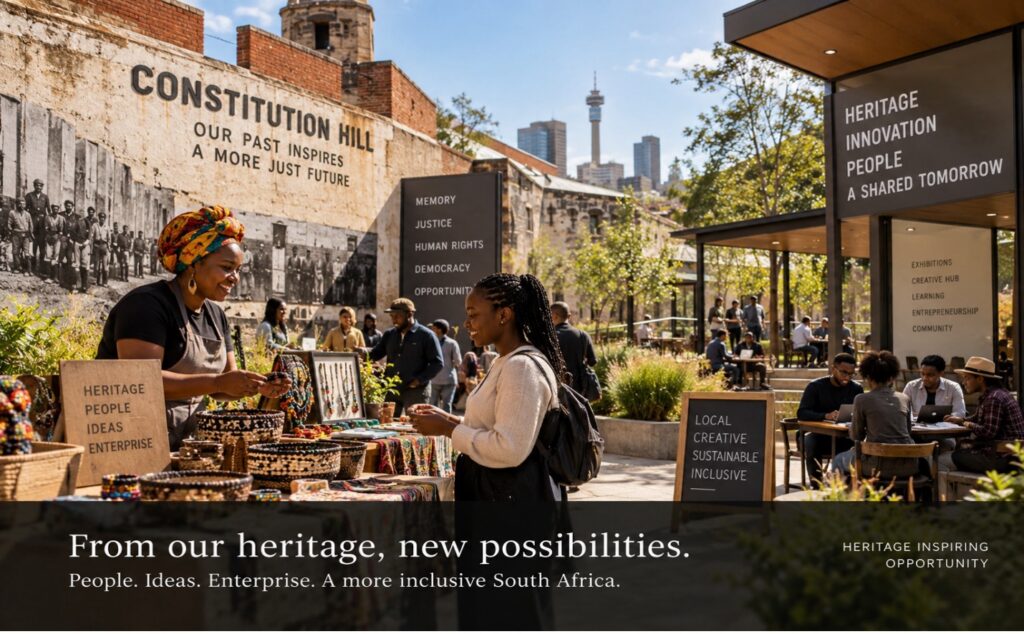
Museums, archives, libraries, memorials and cultural centres protect stories, objects and traditions that cannot be replaced. They hold the shared memory through which people recognise one another, understand where they come from and strengthen the ties that bind communities together. Yet preservation and economic participation are not opposites. In a country that urgently needs jobs, skills and stronger local economies, heritage institutions can protect memory while helping people build livelihoods.
Communities connected to heritage must therefore be recognised as authors, knowledge-holders, partners and business owners, not visitors to their own history. They should arelp decide how stories are told, which knowledge may be shared, and how income from cultural products or experiences is distributed. In this way, celebrating heritage also affirms dignity, belonging and shared responsibility.
The institution of the new era should still collect, conserve and teach, but it should also connect people, ideas, skills, markets and finance. A collection can inspire a designer; an archive can support a filmmaker or game developer; a library can host a business clinic; and a cultural site can create work for guides, food producers, performers and local makers. These connections allow heritage to remain living, useful and shared across generations.
The economic case for strengthening these connections is already visible. The South African Cultural Observatory’s 2022 mapping study found that cultural and creative industries contributed 2.97% of national GDP in 2020, about R161 billion and supported roughly 1.13 million jobs. Stats SA also reports that tourism employed about one in every 22 working South Africans in 2018. Heritage institutions sit where these two economies meet: culture supplies distinctive content, while tourism, education and digital markets create demand.
The role of a heritage institution is not to run every business. It is to open fair pathways to knowledge, spaces, expertise and audiences while protecting cultural meaning and community rights. Early-stage entrepreneurs can test ideas through incubation; viable ventures can receive help with business models and routes to market; and established firms can be connected to procurement, finance and investment. Done fairly, this work strengthens the relationship between institutions and the communities whose heritage they hold.
Institutions can give these relationships practical form by publishing vendor opportunities, buying locally, providing safe trading space, training community guides, supporting digital payments and negotiating fair licensing. Crucially, support should lead to customers and contracts, not training that ends without a market.
Six ways to strengthen the ties between heritage and opportunity
- Build local enterprise networks. Create transparent opportunities for guides, makers, food businesses, performers, transport providers and accommodation partners.
- Design experiences, not only exhibitions. Walking tours, oral-history sessions, workshops and cultural food experiences can deepen learning and extend visitor stays.
- Turn digital access into opportunity. Virtual exhibitions, searchable archives, games and marketplaces can create work for developers, animators, translators and producers.
- Share knowledge as a service. Offer conservation, archival and storytelling expertise through courses, school programmes and professional services while keeping essential access affordable.
- Partner with creative industries. Bring communities, curators, designers, filmmakers, publishers and technology firms together to develop accurate, respectful products.
- Diversify income without losing purpose. Combine public funding with memberships, events, licensing, education and retail, then reinvest proceeds in collections and communities.
DIGITAL CONNECTION MUST PROTECT SHARED RIGHTS
Digitisation can strengthen the ties between collections and the people they serve by carrying heritage beyond buildings into classrooms, research, publishing, virtual tourism and creative products. A mobile-first, low-data approach can widen access for rural schools and communities and lower the cost of participation.
That wider access must still be governed by clear rules on copyright, cultural sensitivity, community consent, artificial intelligence, attribution and revenue-sharing. “Open” cannot mean extracting value from community knowledge without permission or benefit. Technology should strengthen trust between institutions, communities and users, not weaken it.
Every institution can begin this work of shared stewardship by asking: What part of our public mission is non-negotiable? Who should co-design programmes and share in their value? Which entrepreneurs can use our assets responsibly? What skills, partners and finance are required? How will we know whether heritage and livelihoods are both improving?
A simple dashboard should track collection condition, public access, learning outcomes, local supplier spend, jobs, new ventures, community income, digital reach and public trust. Baselines should be set before programmes start, followed by annual reporting and independent evaluation. This would show whether enterprise activity strengthens shared public value rather than merely commercialising public assets.
South Africa does not lack heritage, creativity or entrepreneurial energy; it lacks a system that connects them. Strengthening those connections requires shared responsibility. Government can establish flexible heritage-enterprise funds and shared digital infrastructure. Institutions can open procurement, collections and spaces to responsible collaboration. Communities bring knowledge, legitimacy and creativity, while universities and private partners can provide research, technology, mentorship and market access. Investors can back ventures that combine commercial and public value.
The evidence suggests that culture is already economically significant; the choice is whether heritage institutions participate deliberately and fairly. They should be judged not only by what they keep, but by what they enable: shared memory turned into understanding, knowledge turned into skills, ideas into enterprises and culture into shared prosperity. That is not a departure from heritage. It is how we celebrate heritage as a living force alive, useful and owned by the people whose stories it carries and how we strengthen the ties that bind us.